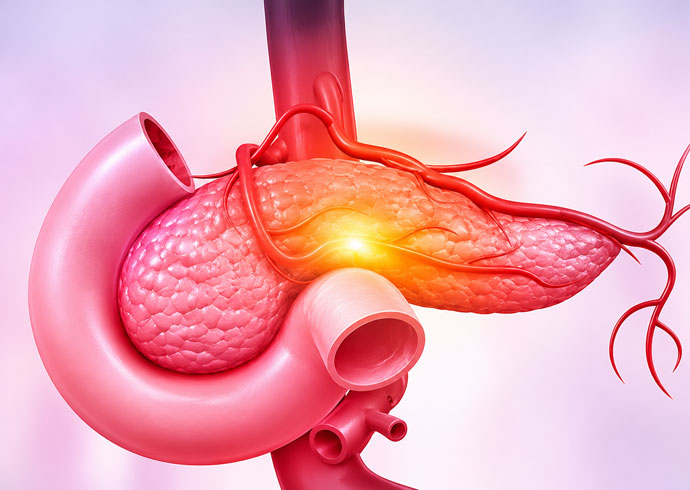
Conditions Associated with Pancreatic Cancer
Pancreatic cancer can develop from different types of cells within the pancreas. Common types include:
- Pancreatic Adenocarcinoma: The most common type, developing in the cells lining the pancreatic ducts.
- Pancreatic Neuroendocrine Tumours (PNETs): Rare tumours arising from hormone-producing cells of the pancreas.
- Acinar Cell Carcinoma: A rare type of pancreatic cancer that develops from enzyme-producing cells.
- Solid Pseudopapillary Neoplasm: An uncommon pancreatic tumour that is generally found in younger patients.
- Pancreatic Cystic Neoplasms: Certain pancreatic cystic growths may have the potential to become cancerous and require appropriate evaluation.
Symptoms of Pancreatic Cancer
Pancreatic cancer may not cause noticeable symptoms in its early stages. As the condition progresses, patients may experience:
- Persistent pain in the upper abdomen, sometimes spreading to the back
- Yellowing of the skin and eyes (jaundice)
- Unexplained weight loss
- Loss of appetite
- Nausea and vomiting
- Dark-coloured urine
- Pale or greasy stools
- Persistent fatigue and weakness
- New-onset diabetes or difficulty controlling blood sugar
- Itching associated with jaundice
These symptoms can also occur due to other medical conditions. Persistent symptoms, particularly jaundice or unexplained weight loss, should be evaluated promptly.
Causes and Risk Factors of Pancreatic Cancer
Pancreatic cancer develops when changes in the DNA of pancreatic cells cause them to grow uncontrollably. The exact cause is not always known, but certain factors may increase the risk:
- Smoking: Tobacco use is an important risk factor for pancreatic cancer.
- Chronic Pancreatitis: Long-standing inflammation of the pancreas may increase cancer risk.
- Family History: A family history of pancreatic cancer may increase the risk.
- Genetic Factors: Certain inherited genetic changes and syndromes are associated with pancreatic cancer.
- Diabetes: Long-standing diabetes is associated with an increased risk of pancreatic cancer.
- Obesity: Excess body weight may contribute to an increased risk.
- Age: The risk generally increases with age.
- Alcohol Consumption: Heavy alcohol use may contribute to chronic pancreatitis, which is a risk factor.
Surgical Treatment Options
Surgery may offer a treatment option for patients whose cancer can be safely removed. The type of surgery depends on the location and extent of the tumour.
- Whipple Procedure (Pancreaticoduodenectomy): Removal of the head of the pancreas along with the duodenum, gallbladder and bile duct, when required.
- Distal Pancreatectomy: Removal of the body and tail of the pancreas, sometimes along with the spleen.
- Total Pancreatectomy: Removal of the entire pancreas in selected cases where the tumour involves multiple parts of the organ.
- Vascular Resection and Reconstruction: Removal and reconstruction of involved blood vessels in carefully selected patients.
- Laparoscopic Pancreatic Surgery: Minimally invasive surgery performed through small incisions in suitable patients.
- Robotic-Assisted Pancreatic Surgery: Robot-assisted techniques may be considered for selected complex pancreatic procedures.
Other Treatment Approaches
Depending on the cancer stage and individual treatment requirements, additional therapies may be recommended before or after surgery, or when surgery is not suitable.
- Chemotherapy: Uses anti-cancer medicines to destroy cancer cells or slow their growth.
- Radiation Therapy: Uses targeted radiation to treat cancer cells in selected cases.
- Targeted Therapy: Uses medicines that act on specific genetic changes in cancer cells when suitable.
- Immunotherapy: Helps the immune system recognise and fight cancer cells in selected eligible patients.
- Palliative Care: Helps manage pain, digestive symptoms and other treatment-related concerns to improve comfort and quality of life.
Treatment may involve a combination of surgery and other cancer therapies. The recommended approach is based on detailed evaluation and the patient's individual needs.
Benefits of Timely Pancreatic Cancer Treatment
Early evaluation and appropriate treatment planning can help improve disease management and provide better opportunities for effective care. Potential benefits include:
- Better opportunities for identifying cancer at an earlier stage
- Assessment of eligibility for potentially curative surgery
- Improved planning of personalised treatment
- Access to advanced laparoscopic and robotic surgical options when appropriate
- Better management of symptoms and related complications
- Appropriate follow-up and long-term care planning
Treatment outcomes vary depending on the cancer stage, tumour characteristics, overall health and response to treatment.
Prevention and Risk Reduction
Pancreatic cancer cannot always be prevented. However, certain lifestyle measures may help reduce some risk factors and support overall pancreatic health.
- Avoid smoking and all forms of tobacco.
- Maintain a healthy body weight through balanced nutrition and regular physical activity.
- Limit alcohol consumption to reduce the risk of chronic pancreatitis.
- Manage diabetes with appropriate medical guidance.
- Follow a balanced diet rich in fruits, vegetables and whole grains.
- Seek medical evaluation for persistent abdominal pain, jaundice or unexplained weight loss.
- Discuss genetic counselling and appropriate monitoring if you have a strong family history of pancreatic cancer.
Individuals with a strong family history or inherited risk factors may benefit from specialist advice regarding appropriate monitoring and evaluation.