When is Chemoport Insertion Recommended?
A chemoport may be recommended for patients undergoing chemotherapy or other treatments that require repeated access to a vein. It is particularly useful in the following situations:
- Patients requiring repeated chemotherapy sessions.
- Patients receiving long-term intravenous cancer treatment.
- Patients whose peripheral veins are difficult to access.
- Patients requiring administration of medicines that may irritate smaller veins.
- Patients needing repeated intravenous fluids or supportive medications.
- Patients whose treatment plan requires reliable long-term venous access.
Benefits of Chemoport Insertion
A chemoport provides convenient and dependable venous access throughout the treatment period. Its benefits include:
- Fewer Needle Insertions: Reduces the need for repeated needle punctures in peripheral veins.
- Reliable Venous Access: Provides consistent access for scheduled chemotherapy sessions.
- Patient Comfort: Helps make repeated intravenous treatment more convenient.
- Protection of Peripheral Veins: Reduces repeated use of smaller veins in the arms.
- Long-Term Use: Can remain in place throughout the required treatment period.
- Convenient Treatment: Allows healthcare professionals to administer prescribed medicines through a dedicated access point.
Chemoport Insertion Procedure
Chemoport insertion is generally performed as a minor surgical procedure under local anaesthesia, with sedation when required. The procedure is planned according to the patient's medical condition and venous anatomy.
- Pre-Procedure Assessment: Medical history, blood investigations and imaging are reviewed to assess suitability and plan the insertion.
- Anaesthesia: Local anaesthesia is administered to minimise discomfort during the procedure.
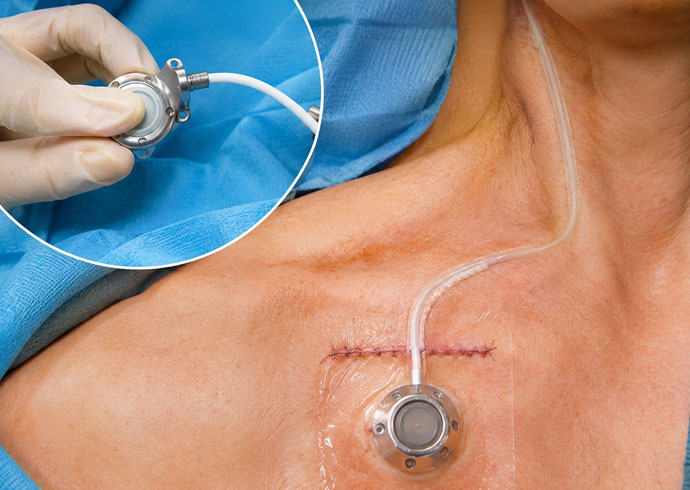
- Port Placement: A small incision is made, usually in the upper chest, to create a pocket beneath the skin for the port.
- Catheter Insertion: A thin flexible tube is guided into a large vein and connected to the port.
- Position Confirmation: The catheter position and functioning are checked before the procedure is completed.
- Wound Closure: The incision is closed and a dressing is applied to protect the area.
Most patients can return home on the same day, depending on their overall condition and the treating team's advice.
Possible Risks and Complications
Chemoport insertion is generally safe when performed by an experienced medical team. However, like any procedure, it may involve certain risks, including:
- Mild pain, bruising or swelling around the insertion site.
- Bleeding or collection of blood beneath the skin.
- Infection around the port or within the bloodstream.
- Blood clot formation in the vein.
- Catheter blockage or displacement.
- Rare complications such as injury to nearby structures or air entering the chest cavity.
Proper insertion, regular monitoring and appropriate port care help reduce the risk of complications. Seek medical attention if you notice fever, increasing pain, redness, swelling or discharge around the port.
Care After Chemoport Insertion
Proper care is important to maintain the function of the chemoport and reduce the risk of infection. Patients should follow their treating team's instructions, including:
- Keep the insertion site clean and dry as advised.
- Avoid unnecessary pressure or injury to the port area.
- Follow wound dressing and bathing instructions.
- Attend scheduled follow-up appointments.
- Ensure the port is flushed at recommended intervals by trained healthcare professionals.
- Report fever, redness, swelling, pain or unusual discharge promptly.
- Inform your medical team if you experience arm or neck swelling or discomfort.
A chemoport can remain in place for as long as it is needed, provided it is functioning properly and there are no complications. It is removed when it is no longer required.
Preventing Chemoport-Related Complications
Following proper hygiene and maintenance practices can help reduce the risk of infection, blockage and other port-related problems.
- Ensure that only trained healthcare professionals access the chemoport.
- Maintain proper hand hygiene before handling the port area.
- Follow the recommended port flushing schedule.
- Keep the insertion site clean and monitor it for signs of infection.
- Attend regular follow-up appointments for port assessment.
- Seek medical advice if the port becomes painful, swollen or difficult to access.
Regular care and timely medical attention help maintain chemoport function and support uninterrupted cancer treatment whenever possible.